
Leadership Through the Ledger
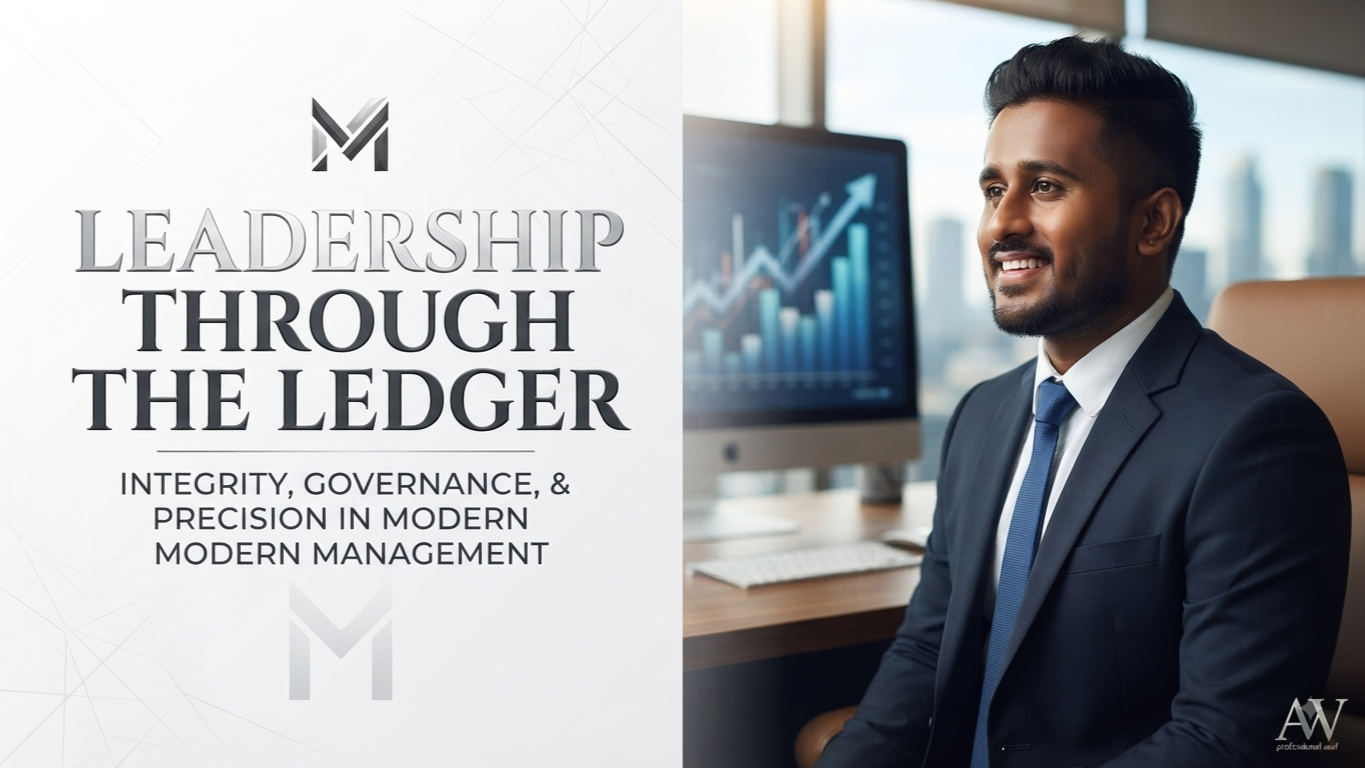
Leadership Through the Ledger: A Conversation on Precision, Growth, and Governance
In the fast-paced world of modern commerce, corporate leadership is often romanticized through big-picture strategies, disruptive innovation, and high-stakes market expansions. However, behind every successful enterprise lies a foundational element that rarely makes the headline features: structural clarity, financial integrity, and rigorous governance.
We sat down with Amila Wanigasekara, an accomplished audit, accounting, and financial management professional, to discuss what it truly takes to steer organizations toward long-term stability and success.
The Architecture of Modern Governance
When looking at corporate leadership, the role of a chairman or executive leader extends far beyond steering strategic growth. According to Amila, true leadership begins with control frameworks and transparency.
"You cannot scale what you cannot measure," Amila explains. "Many organizations focus entirely on top-line revenue while neglecting the internal systems that keep the business stable. Sustainable growth requires a balance between aggressive vision and defensive financial discipline.
Drawing from an extensive background in external and internal auditing, risk assessment, and corporate governance, Amila emphasizes that modern leadership demands a deep understanding of risk management. Whether evaluating internal controls, streamlining financial reporting, or ensuring compliance across operations, a leader must champion accuracy at every level.
Moving Beyond the Numbers: The Human Element of Leadership
While technical skills—such as advanced financial analysis, ERP systems deployment, and budgeting frameworks—form the backbone of financial administration, leadership ultimately comes down to people.
Throughout a career spanning corporate management and advisory roles, Amila has consistently prioritized operational coordination and team empowerment. Building a culture of accountability means fostering open lines of communication between departments, removing financial discrepancies before they compound, and supporting professional growth within teams.
Core Pillars for Organizational Excellence
For emerging entrepreneurs and corporate executives looking to optimize their organizations, Amila highlights three non-negotiable principles:
Robust Internal Controls: Identifying control gaps early prevents operational drift and protects corporate assets from unforeseen risks.
Transparent Financial Reporting: Real-time visibility into cash flows, ledger management, and balance sheets ensures that leadership can make informed, data-driven decisions.
Continuous Process Improvement: Adapting to modern digital tools, cloud-based accounting ecosystems, and automation ensures that administrative friction never slows down business momentum.
Looking Ahead
As business environments continue to evolve globally, the demand for sharp, compliance-oriented leadership has never been higher. By bridging the gap between meticulous financial accounting and high-level corporate strategy, leaders like Amila Wanigasekara demonstrate that the most resilient companies are built on a foundation of absolute transparency and disciplined execution.